Email by email
Live render · what's in it now · what I'd change
1
"You're in 💫"
Immediate · Preview: "Open me, your welcome treat is inside!"
£7,537 · 74.5% open
Carries the thesis

Live mobile render
What's there now
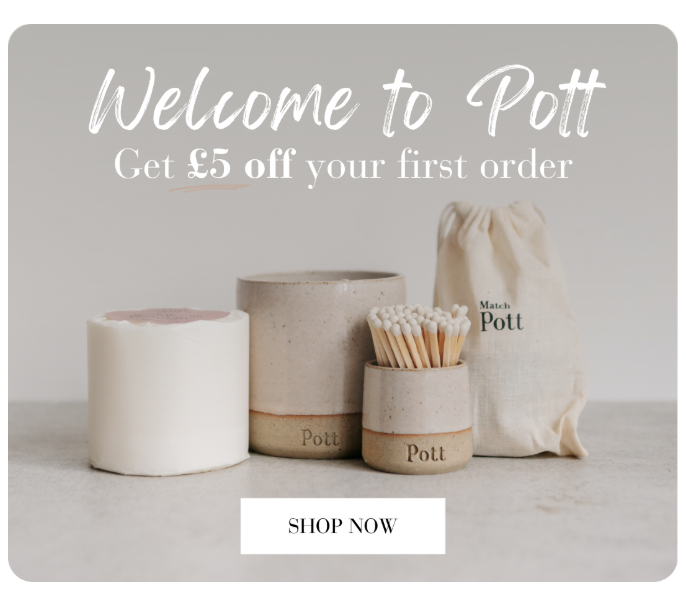
- Generic warm welcome: "early access, exclusive offers, latest updates."
- £5 off + code
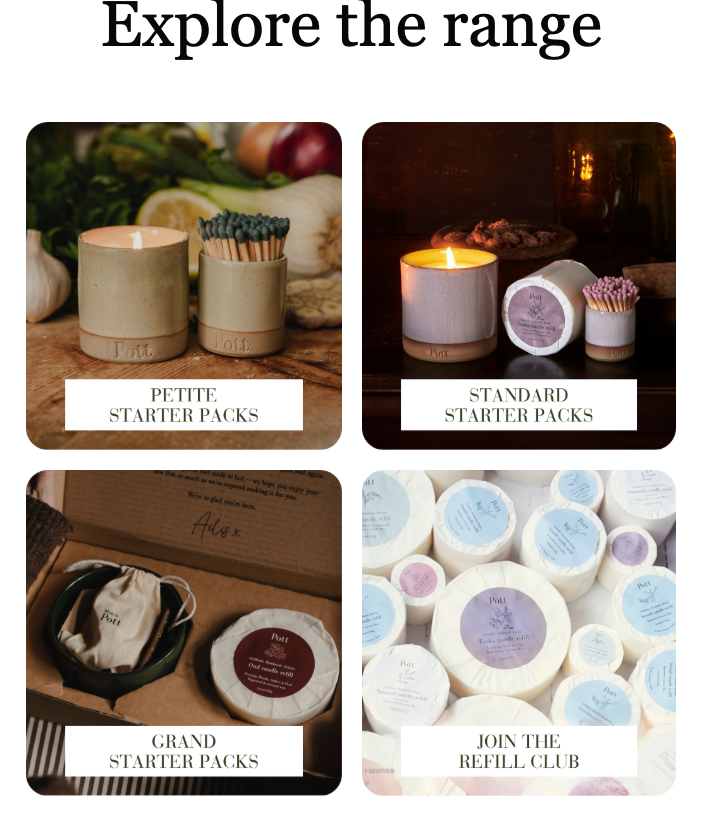
Starter-DV46XFF; "explore our range." - Strong design: hero, product grid, Instagram strip, press logos (Good Housekeeping, House Beautiful).
- Says nothing that distinguishes Pott; "refill" appears only in the nav.
- Offer wording clashes: hero "£5 off first order" vs body "first Starter Pack."
- Starter Pack link → the
-old-copyPDP (the CRO-flagged page). - Two competing CTAs: GET STARTED + SHOP NOW.
What I'd change
- Lead with the one reason Pott is different: buy the Pott once, refill forever: cheaper over time, less waste. This is the price-justifier AND the differentiator.
- Keep the beautiful design; re-point the copy, not the layout.
- Collapse to a single primary CTA → Shop Starter Packs.
- Add one short customer review (you have press logos; add a human voice).
- One line of expectation-setting ("here's what to expect from us") to slow unsub bleed.
- Fix offer wording + repoint link off
-old-copy: safe to do now.
Why here: 74.5% of people open this and almost no one reads past it. If the differentiator isn't in E1, it effectively isn't in the flow.
🎨 Design & imagery
Now: hero is thin white script over a busy product cluster (the £5 line reads small) and leads with product, not a room; the "Explore the range" tiles are labelled and clickable but use inconsistent crops; the press logos are legible but buried in the footer. Fix: high-contrast headline + offer over a styled in-home hero; one consistent crop across the grid (keep price out, value before price); lift a press/review strip higher.
2
"Discover our Story 💗"
+2 days · Preview: "Find out more about us and meet our founder…"
£120 · 2.0% click
Becomes the proof email

Live mobile render
What's there now
- Lovely founder story: Ailis, lockdown origin, 360M UK candles/yr, handmade UK artisans.
- "Small changes, big impact." Signed "Ailis xx." READ OUR STORY CTA.
- Genuinely strong brand-building: design and voice are right.
- Doing the differentiation job that E1 should already have done.
What I'd change
- Re-cast as the proof & price-justification email now that E1 carries the USP.
- Lead with craft: handmade, UK artisans, "each Pott is unique": this is what the £ buys.
- Add collaborations (e.g. IOW Tomatoes) as credibility + brand depth, a natural fit here.
- Keep the founder voice; add a soft Starter Pack CTA + code reminder.
Why here: the "why does it cost this?" objection is best answered with craft + collaborations once belief is already seeded in E1.
🎨 Design & imagery
Now: the strongest imagery in the flow: the founder shot + hands-making / pouring shots are the craft proof that justifies the price. It's all brand-side, though. Fix: lean into these even harder; add one genuine customer-in-home photo for warmth and proof.
3
"How do Pott refills work?"
+2 days · Preview: "Get one Pott with endless refills…"
£169 · 1.4% click
Best asset · home of the savings ladder

Live mobile render
What's there now
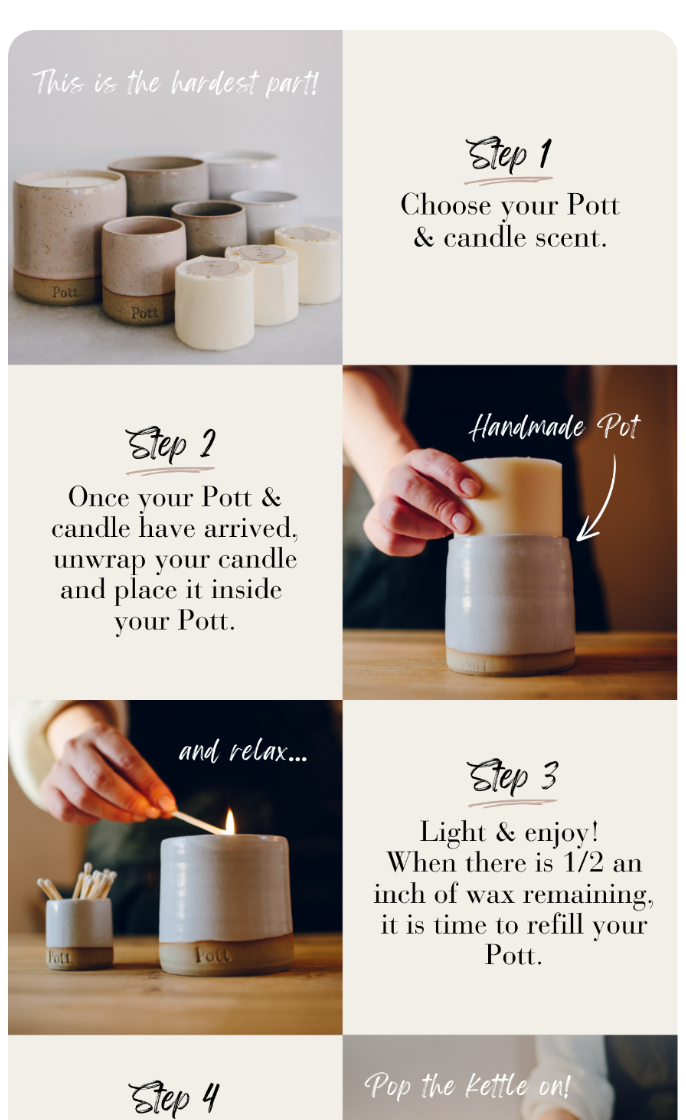
- Clean step-by-step refill guide + "One Pott. Many Refills." SHOP NOW.
- The single best-designed asset in the whole flow.
- Stranded at position 3 with a 1.4% click: teaching the USP where nobody's looking.
What I'd change
- Promote its essence into E1; keep the full visual guide here as reinforcement for slow deciders.
- Make the savings ladder obvious: this is awareness of a price benefit, not a pitch to subscribe:
- → a new candle every time = the priciest, most wasteful option
- → refills = much cheaper (you already own the Pott)
- → subscribe = cheaper still, and your favourite scent always arrives: never run out, never reorder
- Frame it as "spend the least and never think about it again," not "now subscribe."
- Add social proof (a review or "X,000 Potts refilled").
Why here: subscription isn't a separate upsell; it's the cheapest rung of the refill story, so it belongs right where refills are explained. The customer only needs to hear the saving and the convenience; the loyalty/LTV upside (subscribers repeat 86.6% vs 36%) follows on its own.
🎨 Design & imagery
Now: the best-working imagery in the flow: the Step 1–6 guide genuinely teaches and even shows the refill going into the Pott. One catch: it's a single tall image with the step text baked in, so the copy gets small on mobile. Fix: keep the layout, but rebuild it as live text + images (not one flattened graphic) so it stays legible and dark-mode-safe.
4
"Find your perfect scent 🌸"
+2 days · Preview: "With the help of our scent wheel…"
£316 · best back-half · 0.33% unsub
Mostly keep

Live mobile render
What's there now
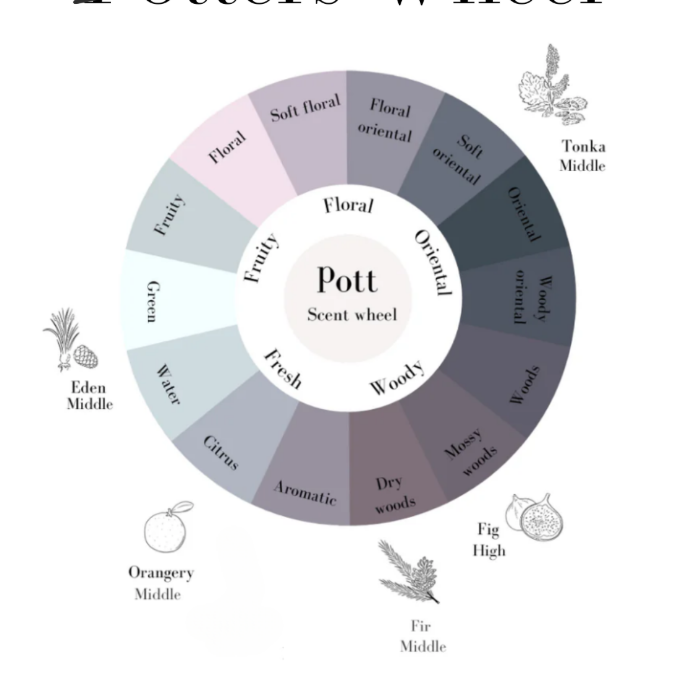
- Scent Wheel + core scents; DISCOVER OUR SCENTS / SHOP NOW.
- Well-placed "now go choose" nudge: best slot of the back half (lowest unsub).
- Several duplicate CTAs stacked (SHOP NOW + DISCOVER repeated).
What I'd change
- Keep the role, light touch only.
- Bridge scent → Starter Pack type: which pack (Petite / Standard / Grand) suits them, so the nudge lands on a product, not a page.
- Trim duplicate CTAs to one clear primary.
Why here: it already converts best of the back half; don't over-engineer, just point it at the packs.
🎨 Design & imagery
Now: appetising, on-brand botanical scent imagery (figs, citrus, greenery). But the Scent Wheel renders far too small to read on mobile, and the DISCOVER buttons repeat. Fix: make the wheel a larger tappable / simplified-for-mobile graphic; trim to a single CTA.
5
"Your discount is about to expire!"
+1 day · Preview: "Be quick, you wouldn't want to miss out…"
£174 · 3.1% click
Bare · breaks in dark mode
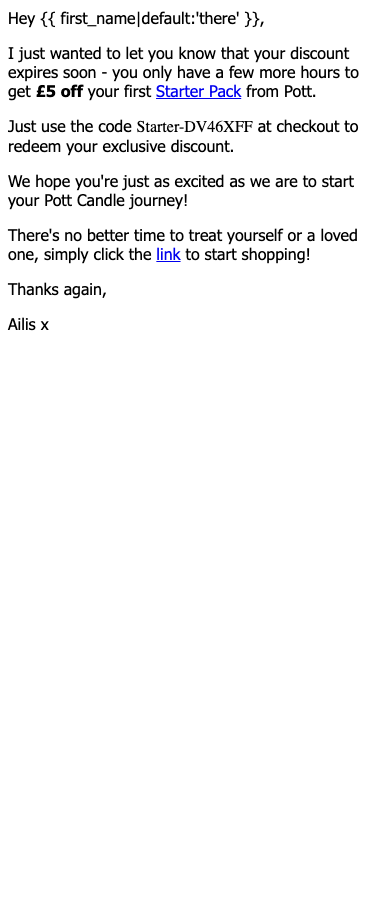
Light mode: bare & unbranded, but legible
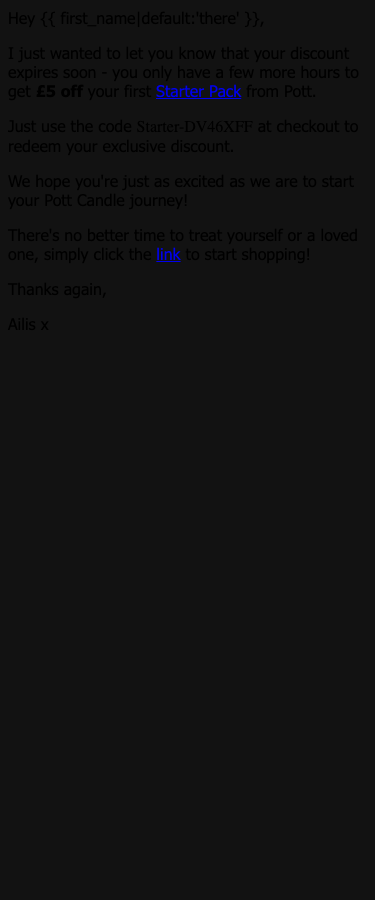
Dark mode: inverts to black, looks broken
What's there now
- Short founder note: "expires in a few hours," code, "treat yourself or a loved one."
- Bare plain text: no header, logo, button or images; renders on a blank background.
- Urgency may not be real: the code shows no visible expiry.
What I'd change
- Rebuild as a properly branded last-call (Pott header + a real button), or commit fully to a deliberate clean "note from the founder" style, not an accident.
- Verify the code actually expires. If it doesn't, make it real or soften the claim: false urgency trains people to ignore deadlines.
- Add the single best review as a final nudge.
Why here: it's the last paid-attention moment before they go cold; right now the format undercuts the urgency.
🎨 Design & imagery
Now: bare text with no header, logo, image or button. In light mode (left) it's legible but completely unbranded; in dark mode (right) it inverts to black because no background or text colours are set, and looks broken. Fix: rebuild with a Pott header + hero + a real button (or a deliberately minimal but branded founder note), and set explicit background + text colours so it can't invert in dark mode.
✆
The two SMS
Welcome SMS (~1 min after E1) · Expiry SMS (after E5)
Welcome: £501 · 5.0% CVR
Expiry: live typo · £0
What's there now
- Welcome SMS: "Enjoy £5 off your first Starter Pack…" 33.3% click, 5.0% CVR, £501. A quiet winner.
- Expiry SMS: live typo: "Use the
coceStarter-DV46XFF…", 0 conversions, going to real subscribers now.
What I'd change
- Leave the welcome SMS alone, it's pulling its weight.
- Fix "coce" → "code" immediately. One-word edit, best effort-to-impact in the whole audit.
- Reassess whether the expiry SMS is redundant vs E5 / poorly timed (0% conv suggests one or the other).